UK Beauty in 2026: Plan Hair Tool Costs and Reorders
For a UK salon supplier or retailer, a useful hair-tool quotation should make the next order easier to repeat. The lowest unit price does not tell you whether two offers cover the same brush size, sales pack or approved finish. Start with an identifiable product and a clear buying brief, then compare the cost of the agreed version.
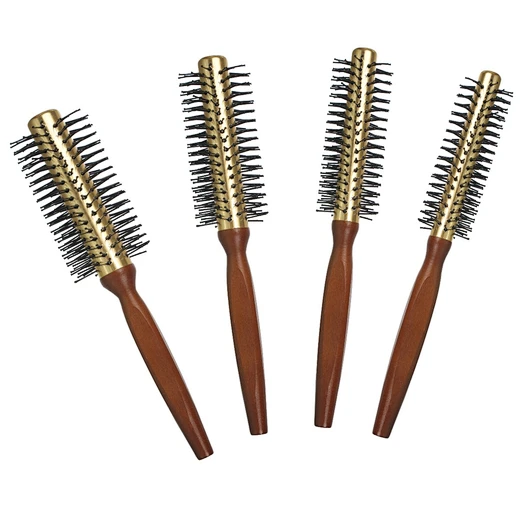
Cover: the WB908 round brush range, shown as a size-selection reference. A range photograph does not mean that every order is a four-brush set.
What the UK industry report tells buyers
The British Beauty Council’s Value of Beauty 2026, compiled by Oxford Economics and published on 1 July 2026, puts the UK personal care industry’s 2025 economic contribution at £28.3 billion. Its overview describes higher wage and operating costs and reports a 2.8% fall in employment. Source: British Beauty Council, Value of Beauty 2026. This covers the wider personal care economy; it is not a sales figure for hairbrushes or a forecast of demand for Tianba products.
Our purchasing interpretation: when budgets are tight, avoid paying for an unclear specification or repeating the same approval work. Build a manageable assortment around your channel and keep a usable record for each selected model.
Six decisions before comparing quotations
- Choose the selling channel and role. A salon replenishment line, retail shelf item and branded promotional pack may need different quantities and presentation. Tell the supplier which use matters and request samples of the shortlisted versions.
- Define the size measurement. Record the model suffix and what the diameter measures. A barrel diameter and an overall diameter including bristles are different measurements. Compare the catalogue, drawing and physical sample before printing a size claim.
- Separate the pricing unit from the pack. State pieces per sales pack, packs or pieces per carton, and quantities by size. Ask for carton dimensions and gross weight for the quoted version so your freight provider can calculate shipment costs.
- Approve the customer-facing details. Confirm the selected colour, logo position, artwork and label wording. Ask which changes are feasible for that model and quantity; a stock product and a customised version may have different minimums, costs and schedules.
- Agree sample and inspection references. Keep the approved sample reference, photos, revision date and agreed acceptance criteria together. Specify the aspects you need checked, such as model identity, finish, bristle arrangement, pack count and carton marks.
- Plan the repeat order. Record quantities by model and size, required delivery timing and the agreed packaging version. Ask the supplier to confirm availability and production timing for each reorder rather than assuming the first quotation still applies.
A concrete example: one brush family, different carton counts
The Tianba WB908 round brush page separates four catalogue variants: WB908-8 at 13mm, WB908-10 at 15mm, WB908-12 at 20mm and WB908-14 at 25mm. The catalogue lists 240 pieces per carton for the first two and 120 pieces per carton for the latter two. These are catalogue size labels; confirm the measurement reference against the sample.
For assortment planning, 480 pieces of WB908-8 would represent two standard cartons, while 480 pieces of WB908-12 would represent four. This is a packing example, not an order minimum or a mixed-carton commitment. Confirm the current quotation, packing, weight and shipping arrangement before placing an order. Clear unit information helps prevent a size change from quietly changing your carton plan.
How Tianba can help turn the brief into an order

Tianba’s business roots date to 1989, and Guangzhou Tianba Beauty & Cosmetic Co., Ltd. was established in 2004. Buyers can discuss available models, sample requirements, feasible logo and colour options, retail-pack quantities, labels, carton marks and order planning with the team.
A practical enquiry includes your market and channel, selected models and sizes, quantity by variant, packaging brief, artwork status and target delivery timing. Tianba can use these details to coordinate sample and packaging discussions and clarify the proposed order version. Customisation feasibility, minimum quantities, inspection requirements, costs and timing must be agreed in the quotation.
Buyer questions
Can I treat the range photo as a set?
No. Specify the exact models and pieces included in each sales pack. The WB908 cover illustrates alternatives within a family; a set needs its own confirmed contents and quotation.
Does the industry report prove demand for a particular brush?
No. Use it as broad business context. Validate your own channel’s assortment with product samples, customer feedback and repeat-order performance.
What should I retain for a consistent reorder?
Keep the model and suffix, sample reference, approved artwork, pack counts, carton marks and revision date. Confirm any proposed change with the supplier before repeating the order.
Prepare your next buying brief: browse Tianba hair and salon tools or contact Tianba about models, samples and packaging.
Beautyworld Dubai 2026: A Salon Tool Buying Brief
Australia Beauty eCommerce: A Hair Tool Data Checklist
Related Article