Beauty Buyers Want Value: A Sourcing Checklist for Hair & Salon Tools

For brands, distributors and wholesale buyers
A useful beauty tool earns its place through a clear purpose, a suitable specification and consistent order information. For buyers comparing similar-looking hair rollers, combs, brushes or salon accessories, the lowest unit price alone does not answer whether two quotations describe the same product.
What the beauty market research tells buyers
McKinsey’s June 2025 State of Beauty report describes consumers as more attentive to value and skeptical of hype. This is research about the broader beauty industry, not a market-size study of hair tools. Our sourcing interpretation is practical: make the product’s purpose and specifications easy to understand before adding promotional claims.
Compare five things before comparing prices
- Intended use. Is the item for salon sectioning, curl setting, blow-dry styling or retail home-use assortments? Choose the application first.
- Dimensions and materials. Record roller diameter and length, comb tooth spacing, brush size and bristle configuration, or bowl capacity as relevant. A photo cannot establish these details.
- Sample approval. Check appearance, finish, fit and handling against an agreed sample. Record the model and any approved changes so a repeat order can be compared with the same reference.
- Packaging quantities. Distinguish pieces per pack, packs per carton and pieces per carton. Confirm whether a quotation is for an individual item, a mixed assortment or a set.
- Order conditions. Ask the supplier to confirm customization feasibility, minimum order quantity, sample timing, production lead time and delivery terms for the specific project.
Turn a product idea into a clearer sourcing brief
A workable brief includes the model or reference image, intended use, required dimensions, material preferences, quantity by colour, logo artwork and packaging requirements. Add the destination and target delivery date. This gives a supplier enough information to review feasibility and identify missing details before a quotation becomes an order.
When comparing suppliers, use the same brief for each enquiry. If one offer changes the material, pack quantity or included parts, separate that difference from the unit-price comparison. This does not guarantee a lower total cost; it makes the commercial comparison more meaningful.
How Tianba supports the process
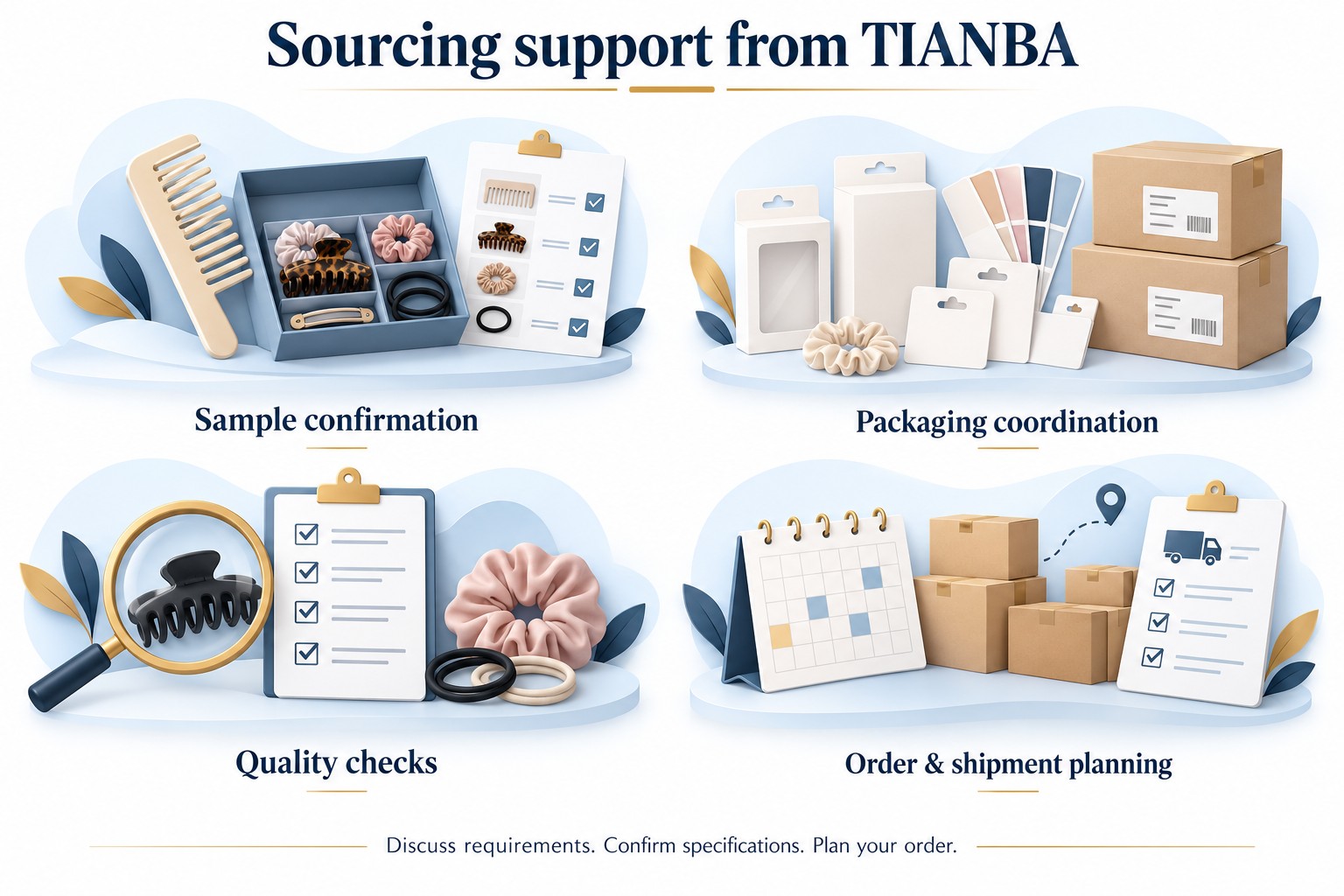
Guangzhou Tianba Beauty & Cosmetic Co., Ltd. supplies hair rollers, combs, brushes, clips, colouring tools and salon accessories. Tianba supports product requirement review, sample confirmation, packaging discussions and order coordination. Its quality-management procedures cover incoming, in-process and finished-product inspection, nonconforming-product control and complaint follow-up. Inspection criteria and project requirements should be agreed for the order.
Tianba’s brand and business origins date to 1989; the company was established in 2004. Customization options depend on the model, materials and order requirements. Confirm the final specification, approved sample, packaging and schedule before bulk production.
Buyer questions
What should I send for a wholesale quotation?
Send the model, specifications, quantity, packaging and destination. Include artwork if branding is required.
Can the same product image represent different specifications?
Yes. Confirm the written model details and sample rather than relying on visual similarity.
Explore Tianba products or discuss your sourcing brief.
Source and editorial note
McKinsey, State of Beauty 2025: Solving a shifting growth puzzle, 9 June 2025. The purchasing checklist and application to salon tools are Tianba editorial analysis, not findings or endorsements attributed to McKinsey.
Hair Styling Momentum: How Buyers Can Build a Clearer Brush and Roller Assortment
质量管理体系文件
Related Article